How to Increase Cold Call Connect Rates in 2026: A Data-Driven Guide

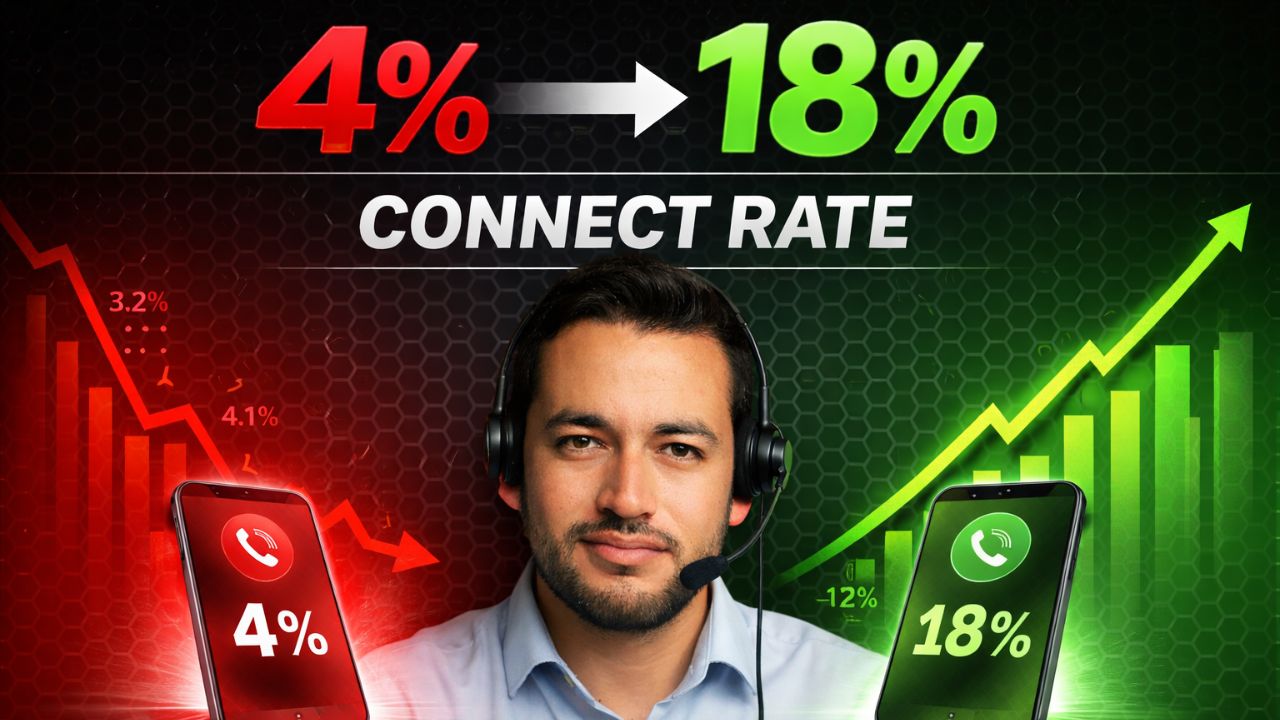
Cold call connect rates have been declining for years. The average across the industry hovers around 4–6%, down from double digits a decade ago. But some SDR teams are consistently hitting 12–18% connect rates — and they're not doing it by calling more.
The gap between average and top-performing teams isn't about effort, scripts, or talent. It's about the systems and workflows they've built around every call. Here's what the data actually tells us about what moves connect rates — and what doesn't.
Why Connect Rates Are Falling (And It's Not What You Think)
The standard explanations — "people don't answer their phones anymore" or "caller ID is killing cold calling" — are only partially true. The bigger culprits are systemic:
Data decay is accelerating. People change jobs more frequently. Phone numbers become invalid faster. The half-life of B2B contact data is shorter than ever. A phone number that was valid 6 months ago has a meaningful probability of being disconnected today.
Spam flagging is getting more aggressive. Carriers are using AI to flag and block suspected spam calls. If your team's dialing patterns look robotic — high volume, many unanswered calls, rapid successive dials from the same number — carriers will flag you before the prospect ever sees your call.
Multi-line dialing without data quality is counterproductive. Parallel dialers amplify whatever's in your list. If 50% of your numbers are bad, a parallel dialer burns through that bad data faster, generates more unanswered calls (which trigger spam algorithms), and creates the appearance of lower connect rates even when the valid numbers haven't changed.
The common thread: connect rates are primarily a data and systems problem, not a dialing effort problem.
The Five Levers That Actually Move Connect Rates
Lever 1: Fix Your Phone Numbers First
This is the single highest-impact action you can take. Teams that implement waterfall enrichment — running contacts through multiple data providers sequentially — consistently report 30–50% improvements in connect rates, simply because more of their calls reach a real person.
The math is direct: if your list has 50% valid numbers and you improve that to 90%, you've nearly doubled the number of reachable prospects without making a single additional call. Every other optimization — scripts, timing, caller ID — builds on this foundation.
Action step: Before your next calling campaign, run your list through multiple data sources to validate and update phone numbers. Compare your connect rate before and after. The delta will tell you exactly how much data quality is costing you.
Lever 2: Protect Your Caller ID Reputation
Carrier spam algorithms are trainable — and they're training on your dialing behavior right now. Here's what flags your numbers:
High call volume with low answer rates (looks like a robocaller)
Calling from the same number to many recipients in a short window
Rapid successive calls to the same area code from an out-of-area number
Calls that are answered and immediately hung up (which happens when a parallel dialer connects a rep to one line and drops the others)
Action step: Rotate your caller ID numbers. Use local presence dialing (calling from numbers that match the prospect's area code). Monitor your numbers with spam-checking services. And most importantly — improve your list quality so that more of your calls are actually answered, which tells carriers your calling behavior is legitimate.
Lever 3: Call at the Right Times (But Not the Way You Think)
Every "best time to cold call" article gives the same advice: Tuesday through Thursday, 10–11 AM or 2–4 PM local time. This advice is directionally correct but misses a more powerful signal.
The best time to call a specific prospect is when they've previously answered the phone. If you called someone last month and connected at 2:30 PM on a Wednesday, the next time you call them, that signal is worth more than any general-audience study.
Action step: Track connect times by prospect, not just in aggregate. When following up on nurture contacts, call them at the same day and time they previously answered. This simple tactic boosts nurture connect rates significantly.
Lever 4: Warm the Contact Before You Call
A cold call doesn't have to be ice cold. Teams that layer pre-call touches — a LinkedIn connection request, a brief email, or even a video message — before picking up the phone report 20–40% higher connect rates on the subsequent call.
Why? Two reasons. First, the prospect recognizes your name when they see the caller ID or when the rep introduces themselves. Second, the pre-call touch often triggers the prospect to check out your profile or company, so they have some context before the conversation starts.
Action step: For your highest-priority accounts, send a brief LinkedIn message or email 24–48 hours before calling. Keep it short and value-forward — not a pitch, just a relevant insight or question. Then call.
Lever 5: Build a Compounding Nurture Pipeline
This is the lever with the longest payoff horizon and the highest ceiling. Connect rates on warm follow-ups (people you've previously spoken to) are consistently 2–4x higher than first-touch cold calls. The more nurture contacts you accumulate, the higher your team's blended connect rate becomes.
A team with zero nurture pipeline has to sustain connect rates purely from cold outreach (4–6%). A team where 30% of their weekly calls are nurture follow-ups might see blended connect rates of 8–12% — because those nurture calls are connecting at 15%+ and pulling the average up.
Action step: Start measuring your nurture pipeline as a separate metric. Track the number of warm contacts with scheduled follow-ups, the connect rate on nurture calls vs. cold calls, and the percentage of your weekly call volume that comes from nurture vs. cold. Set a goal to grow the nurture percentage every quarter.
Putting It Together: The Connect Rate Stack
The teams hitting 12–18% connect rates aren't using one trick. They're stacking all five levers:
Clean data going in (waterfall enrichment pushes valid number rates to 85–95%)
Healthy caller ID reputation (local presence, number rotation, legitimate call patterns)
Smart timing (prospect-level time preferences, not just generic "best time" advice)
Pre-call warming (multichannel touches before the phone rings)
A growing nurture pipeline (2–4x higher connect rates on warm follow-ups)
Each lever compounds the others. Clean data means fewer unanswered calls, which protects your caller ID. A healthy caller ID means more answered calls, which builds your nurture pipeline. A growing nurture pipeline means more warm calls, which raises your blended connect rate.
This is why connect rates are a systems outcome, not a dialing outcome. The team that builds the best system wins — regardless of which dialer they're using.