The Virtual Salesfloor Playbook: How to Make Cold Calling a Team Sport

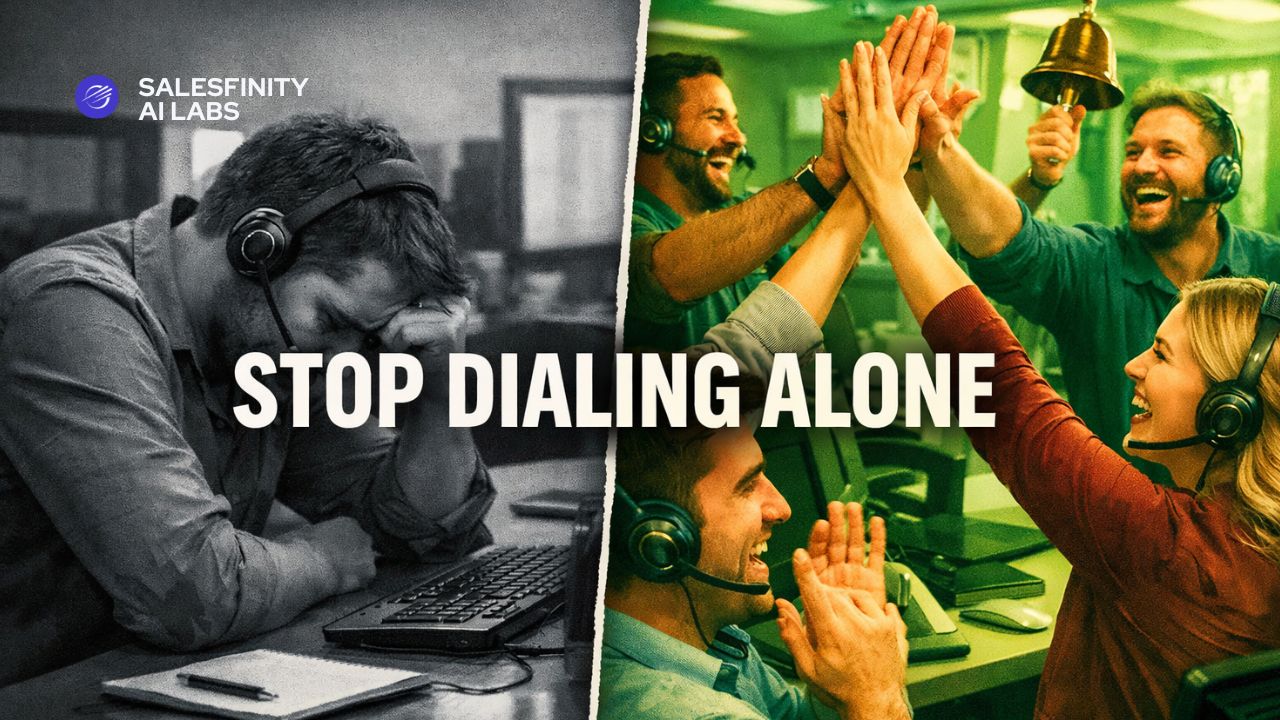
Cold calling is one of the loneliest activities in sales. A rep puts on their headset, opens the dialer, and spends the next 2 hours in a solo loop of calling, getting rejected, and calling again. There's no team energy. No real-time support. No shared momentum. It's just you and the phone.
This is a big reason SDR burnout is so high. It's not the rejection itself — it's the isolation around it. And when you add remote work to the equation, the problem gets worse. The organic energy of a sales floor — overhearing a great pitch, getting a high-five after booking a meeting, asking a colleague for help mid-call — disappears entirely when everyone's dialing from their home office.
The virtual salesfloor is the fix. And the teams using it properly aren't just happier — they're measurably more productive.
What a Virtual Salesfloor Actually Is
A virtual salesfloor is a shared digital space where SDRs dial together in real time, even when they're physically in different locations. Think of it as a persistent video or audio room paired with your dialer — reps can see and hear each other between calls, celebrate wins live, and managers can listen in and coach in the moment.
The concept was popularized by Nooks around 2023, and it's since been adopted by other platforms including Salesfinity. The core idea is simple: replicate the energy and collaboration of a physical sales floor in a remote or hybrid setting.
But the best implementations go beyond just "a Zoom call while dialing." They integrate the salesfloor experience directly into the dialing workflow, so reps aren't switching between a video call tool and their dialer — the collaboration layer is built into the same platform where they make calls.
Why It Works: The Psychology of Collaborative Calling
The productivity gains from virtual salesfloors aren't just about camaraderie (though that matters). There are concrete mechanisms at work:
Social accountability. When you're dialing alone, it's easy to take a 10-minute break after a tough call, check your phone, or lose focus. When your team can see you — not in a surveillance way, but in a shared-effort way — there's a natural pull to stay engaged. Research on social facilitation shows that people perform better on practiced tasks (like making calls) when others are present.
Real-time learning. In a physical sales floor, new reps learn by osmosis — they overhear what experienced reps say when a prospect pushes back, how they handle gatekeepers, how they pitch. A virtual salesfloor restores this ambient learning. Managers can listen to calls in real time and provide coaching immediately, not days later when reviewing a recording.
Momentum cascading. When one rep books a meeting, the team sees it and feels it. That energy is contagious. In a solo dialing session, a win happens in isolation. On a salesfloor, it creates a ripple that lifts everyone's next call.
Reduced decision fatigue. Shared calling blocks ("we all dial from 10–12") reduce the mental overhead of self-scheduling. Reps don't have to decide when to call — the team does it together, which removes one of the biggest sources of procrastination in remote SDR workflows.
How to Run a Virtual Salesfloor That Actually Works
Simply turning on a virtual room doesn't automatically create a high-energy calling culture. The teams getting the best results follow these practices:
Set Structured Calling Blocks
Designate specific times when the entire team (or sub-teams) dial together on the virtual salesfloor. The best cadence we've seen is two 90-minute blocks per day — one morning, one afternoon — with a clear start and end time. This creates ritual and rhythm around calling, which is more effective than "call whenever you want."
Celebrate Wins Publicly and Immediately
When a rep books a meeting, gets a great conversation, or handles an objection well, recognize it on the salesfloor in real time. Some teams use built-in celebration features (sounds, animations), while others simply have the manager give a shoutout. The key is immediacy — the recognition happens during the session, not in a Slack message hours later.
Use Live Coaching, Not Just Recorded Reviews
The traditional coaching model — manager reviews call recordings, schedules a 1:1, provides feedback days later — is too slow. On a virtual salesfloor, managers can listen to calls live and provide whispered coaching or send quick messages during the call. Post-call, they can debrief immediately while the context is fresh. This accelerates rep development dramatically.
Pair Experienced and New Reps
Assign new SDRs to dial alongside experienced reps on the salesfloor. Not for formal training — just proximity. New reps absorb patterns, language, and confidence by being in the room when great calls happen. This is the single most underrated onboarding tactic for remote SDR teams.
Don't Make It Mandatory Surveillance
The fastest way to kill salesfloor energy is to turn it into a monitoring tool. If reps feel like the salesfloor exists so managers can watch them, it becomes a source of stress rather than motivation. Frame it as a collaboration space, not a compliance mechanism. Let reps turn off video if they want. Focus the energy on team support, not oversight.
The Compound Effect: Salesfloor + Workflow
A virtual salesfloor is powerful on its own. But it becomes transformative when it's integrated into a complete calling workflow.
When reps are dialing together on a salesfloor with clean data (waterfall-enriched lists), full prospect context (inline research and CRM data), and automated follow-through (nurture tasks and referral enrichment handled by the system), the salesfloor experience isn't just socially energizing — it's operationally efficient.
Reps aren't commiserating about bad data. They're not stressed about post-call admin. They're focused on conversations and supported by their team. That's when the energy becomes sustainable and the productivity gains stick.
Making Cold Calling Fun Again
"Fun" might sound like a stretch for an activity built around rejection. But the teams with virtual salesfloors consistently report something that matters more than any metric: reps actually enjoy calling sessions.
When you remove the isolation, add team energy, and eliminate the operational friction that makes calling feel like administrative punishment, something shifts. Reps look forward to calling blocks instead of dreading them. They push each other to stay engaged. They celebrate each other's wins and troubleshoot each other's challenges in real time.
In an industry where the average SDR tenure is 14 months and turnover is the biggest cost center for sales leaders, creating an environment where reps want to stay and perform isn't a soft benefit — it's a hard competitive advantage.
Build the salesfloor. Build the workflow around it. Make selling a team sport again.